


Home staging is about creating an inviting, stylish space that resonates with potential buyers. But how do you create the “wow” factor? While some home stagers may use their own furniture, the truth is that many professionals rely on rental furniture to achieve the perfect look.
So, where do home stagers get their furniture? That’s the million-dollar question!
We get this question all the time at the Home Staging Institute – from students working through their home staging certification and curious homeowners alike. The truth is, successful stagers don’t just magically own a warehouse full of stylish furniture. Most use a mix of rental, owned, and sometimes consigned pieces depending on the project, location, and client budget.
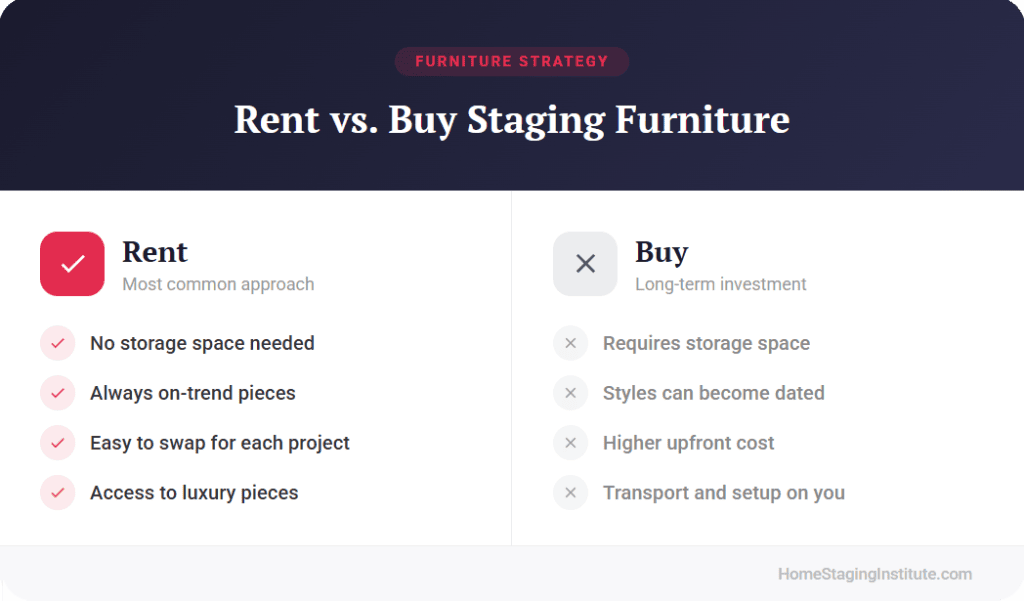
Renting furniture is the most common approach, and for good reason. It gives you access to a wide range of styles and price points without the overhead of buying and storing inventory. It also means you’re always working with pieces that are on-trend and in excellent condition – two things that matter a lot when you’re trying to help a home make a strong first impression.
In this guide, we’ll walk you through how to find the right rental company, what to look for when selecting pieces, and how to personalize rental furniture so every staging project feels polished and intentional.
- Factors To Consider When Buying vs Renting Furniture
- Why Rental Furniture Is the Best Option
- Choosing a Reputable Furniture Rental Company
- Understanding the Rental Process
- Tips For Selecting the Perfect Furniture Pieces
- Mix and Match Furniture
- Ways to Personalize Rental Furniture
- Working With a Professional Rental Company
Factors To Consider When Buying vs Renting Furniture
If you purchase furniture for your home staging business, you must have adequate storage space to store the pieces between staging projects. In fact, many stagers skip buying furniture entirely when they’re starting out – our guide on how to start a home staging business without buying furniture explains how to build a profitable business using rentals and other creative solutions.
Renting furniture eliminates the need for storage space, as the rental company will pick up and store the furniture for you when the project is complete.
Renting furniture also offers more flexibility in terms of changing out pieces for different projects, as you can easily return and exchange pieces as needed. Buying furniture may offer more long-term flexibility, as you’ll have a collection of pieces that you can use for multiple staging projects.
Finally, consider the specific needs of your staging project when deciding whether to buy or rent furniture. Buying furniture may be necessary if you need specific pieces or styles that aren’t available through rental companies. On the other hand, renting furniture may offer more flexibility and customization options if you’re staging a home with a unique layout or particular design needs.
Why Rental Furniture Is the Best Option
As a home stager, you transform a space to appeal to potential buyers. But buying new furniture for each staging project isn’t practical or cost-effective. Although it is a significant long-term investment, it may not be feasible if you’re working with a tight budget. If that’s your situation, our article on starting a home staging company with no money covers several strategies for launching lean while still delivering professional results.
As a result, renting furniture is often the best alternative. You will have access to a wide selection of styles and price points, helping you create a cohesive, attractive space. You can also switch out pieces as needed to present a fresh, on-trend style to potential purchasers.
You can also work with larger and more luxurious pieces than you might have in your own inventory if you rent furniture. This is especially crucial when attempting to demonstrate the potential of a large or high-end property. Plus, rental companies often have high-quality, well-maintained pieces designed specifically for home staging. So, you can be confident the furniture you’re renting will be in great condition and ready to make an impact.
Choosing a Reputable Furniture Rental Company
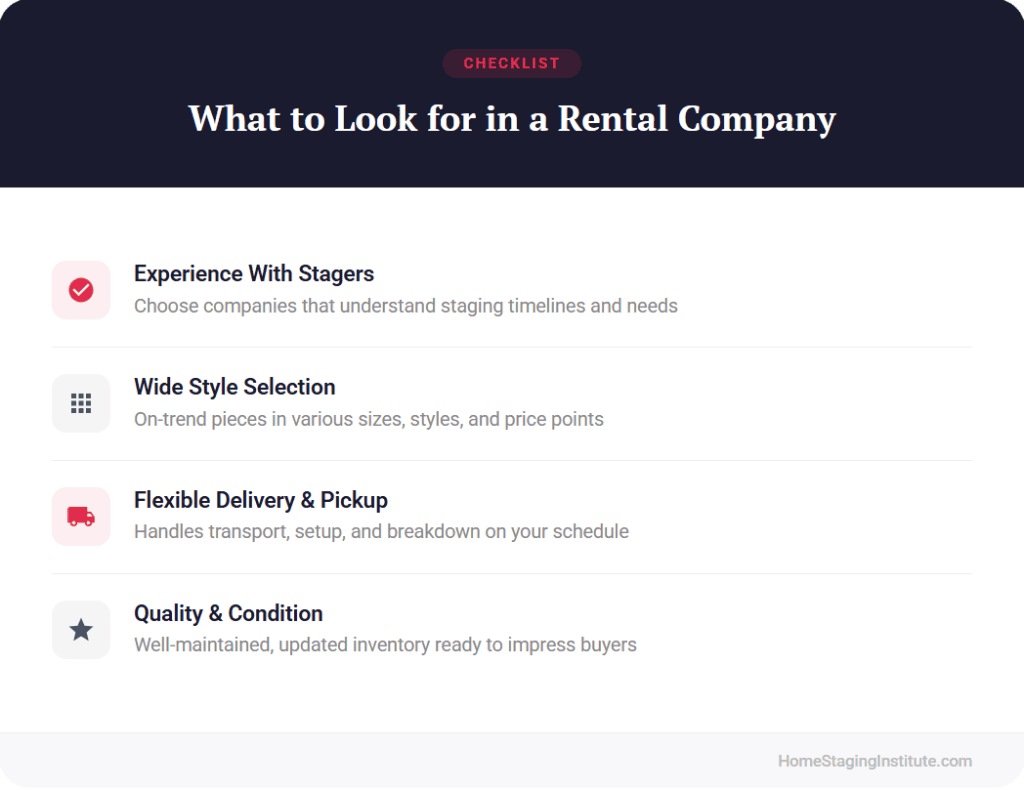
When choosing a furniture rental company, it’s important to do your research. Look for companies with experience working with home stagers and that offer a wide range of styles and options. You’ll also want to consider their delivery and pickup policies, as well as any fees they charge for setup and breakdown.
One of our graduates in Denver swears by her local boutique rental company because they offer flexible pickup times and don’t penalize her if staging timelines shift slightly – something larger companies sometimes struggle with.
Another stager prefers to work with national providers like CORT or AFR Furniture Rental because their catalogs are updated quarterly with on-trend pieces, and they offer bulk discounts for frequent stagers. Before committing, ask to tour their warehouse or view their digital catalog, and always request references from other home stagers.
A good rental company should act like a true partner, helping you solve design problems – not just dropping off furniture and disappearing.
Another factor to consider is the quality of the rental furniture. Look for companies that prioritize maintaining and updating their inventory and offer a range of pieces in various sizes and styles. Finally, consider reading reviews from past customers to gauge the company’s reputation and customer service.
Understanding the Rental Process
Before renting furniture for a staging project, it’s important to understand the rental process. This includes knowing how long you’ll need to rent the furniture, how much it will cost, and the delivery and pickup logistics.
If you have a tight timeline for your staging project, renting furniture allows you to access the pieces you need quickly and have them delivered and set up for you. Buying furniture, on the other hand, may require more time to research and purchase the right pieces, as well as the time and effort to transport and set them up yourself.
When working with a professional rental company, they’ll typically provide you with a quote outlining the rental costs and any additional fees for setup or delivery. They’ll also work with you to schedule a delivery and pick-up date that aligns with your staging timeline. Be sure to communicate any specific timing or logistical requirements to the rental company in advance to ensure a smooth, stress-free process.
Tips For Selecting the Perfect Furniture Pieces
Start by measuring the room and determining the overall style and aesthetic you want to achieve. Then, choose furniture pieces that will fit the space and complement the design and architectural features.
Make sure there is enough space for potential buyers to move around comfortably and that the furniture arrangement emphasises the room’s best features. Finally, don’t be afraid to mix and match furniture designs or eras to create a unique and personalised aesthetic.
Mix and Match Furniture
Mixing and matching furniture can be a great way to create a unique and personalized look for each staging project. When choosing furniture pieces to mix and match, choose a complementary color scheme or design aesthetic. For example, mix mid-century modern pieces with vintage or antique ones in a neutral color palette.
When mixing and matching furniture, consider the scale and proportion. Ensure each piece is correctly sized for the room and the overall arrangement has a sense of balance and harmony. Finally, consider adding decor and accessories that tie the furniture together, such as coordinating throw pillows or artwork.
Ways to Personalize Rental Furniture
Adding decor and accessories to a rental furniture setup can help to personalize the space and make it feel like home. Items like artwork, throw pillows, blankets, and greenery are all classic home staging props that can transform a room of rental furniture into something that feels curated and intentional.
When selecting decor and accessories, consider the space’s overall vibe. Avoid going over-the-top or too personal, as you want potential buyers to envision themselves in the space. Instead, choose pieces that add warmth and personality without overwhelming the overall design.
Working With a Professional Rental Company
When renting furniture for a staging project, working with a professional rental company offers many benefits. They typically have a wide selection of furniture options and can help you choose pieces for each room. They also arrange delivery, setup, and pickup, saving you time and hassle.
Additionally, they can offer valuable advice and expertise on designing and styling each space, should you need it. They can help you stay up to date on current design trends and offer suggestions for creating a cohesive, inviting space. Finally, working with a rental company can help you stay within budget and avoid the expense of purchasing and storing furniture yourself.


