


Have you ever dreamed of running your own home staging business – helping homes sell faster while doing something creative and rewarding – but stopped yourself because of the cost? You’re not alone.
Many aspiring stagers worry they’ll need to spend thousands on furniture before they can even begin.
Here’s the truth: you don’t need a warehouse full of furniture to become a successful home stager. Some of the most profitable staging businesses started with zero inventory, relying instead on rentals, occupied homes, and smart reinvestment strategies.
In this guide, you’ll learn four simple ways to launch your staging business without spending a fortune on furniture so you can focus on creativity, clients, and building your reputation from day one.
When you first imagine yourself as a professional home stager, it’s easy to picture a huge warehouse stacked with furniture, lighting, and accessories – but in reality, most successful stagers begin much smaller.
Many build thriving businesses by renting furniture, staging occupied homes, or repurposing pieces they already own. The secret isn’t how much furniture you have, but how resourceful and creative you are in presenting each home beautifully with what’s available.
So, how do you start your business without owning a warehouse of furniture?
If you’re passionate about starting your own business but aren’t sure where to begin, here are four methods you can use to start one without having an inventory of furniture.
Method 1: Rent Furniture

You don’t need to spend thousands of dollars building an inventory of staging furniture and accessories.
One of the easiest ways to get furniture when starting a home staging business is to rent it.
While renting furniture can be expensive, plenty of local rental companies and retailers will work with you and save you money during the startup phase of your business.
We’ve had good experiences with the following furniture rental companies:
CORT has a nice little saying which will appeal to many reading this article: “Think of us as your behind-the-scenes furniture team”. That sums them up in a nutshell, and the service they provide.
You, as the home staging professional, can manage the staging process, but a company such as CORT can provide the furniture.
Brook Furniture Rental also specializes in providing rental services to home stagers. They act fast and can set up a property in less than 48 hours. Brook Furniture Rental services in the major metropolitan areas across the United States, including locations within: California, DC, Flordia, Georgio, Illinois, Indiana, Maryland, Massachusetts, Michigan, New Jersey, New York, Pennsylvania, Rhode Island, Texas, Virginia, Washington, and Wisconsin.
| Pros of Renting Furniture | Cons of Renting Furniture |
|---|---|
| No need for upfront inventory | Can be expensive over time |
| Access to stylish, updated furniture | Limited control over what’s available |
| Great for beginners & testing the market | Requires reliable delivery coordination |
| Easy scalability as you grow | Costs increase for larger homes |
What to Look for in a Furniture Rental Store
When choosing a furniture rental store to work with, focus on safe and timely delivery and pickup services.
When you need to stage a home that’s on the market, time is of the essence. You need to find a furniture rental store that will deliver the pieces you need on time and help arrange them quickly, correctly, and professionally. They should also be willing to pick up the pieces soon after the house sells. Be sure to ask about these services, as many companies don’t include them in their initial quotes.
While this may sound like a no-brainer for some, it’s a factor that’s often overlooked and can end up costing you in the long run. Find a company to work with that’s located nearby. The further the company, the more you’ll end up paying for shipping costs.
Once you’ve shortlisted some furniture rental stores, you’ll want to check their reviews online. Consumer feedback is always the best guide to a rental company’s performance.
Method 2: Stage Occupied Homes
Most people don’t move out of their homes when they decide to sell. They’ll continue to occupy their home while it’s listed and move out when it sells. When you encounter such a situation, you can stage the occupied home by using the existing décor to stage it. Using the client’s existing furnishings can help them minimize clutter and sell their house for a higher price without spending any of your budget on furniture.
If you find that some new items would be helpful for staging an occupied home, you can talk to your client about buying new items that will help boost the home’s marketability. Make your recommendations during the occupied staging consultation and leave the purchasing decisions to the client.
| Pros of Staging Occupied Homes | Cons of Staging Occupied Homes |
|---|---|
| Requires little to no upfront furniture investment | You’re limited by the homeowner’s existing style and furniture |
| It can take extra time to declutter or depersonalize | Can take extra time to declutter or depersonalize |
| Helps homeowners save money while still improving presentation | Some clients may resist changing their décor |
| Builds strong relationships and trust with sellers | Spaces may not photograph as cleanly as fully staged vacant homes |
| Great for gaining experience and testimonials early in your career | Results can vary depending on how cooperative the client is |
Method 3: Start Small and Reinvest into Buying Furniture
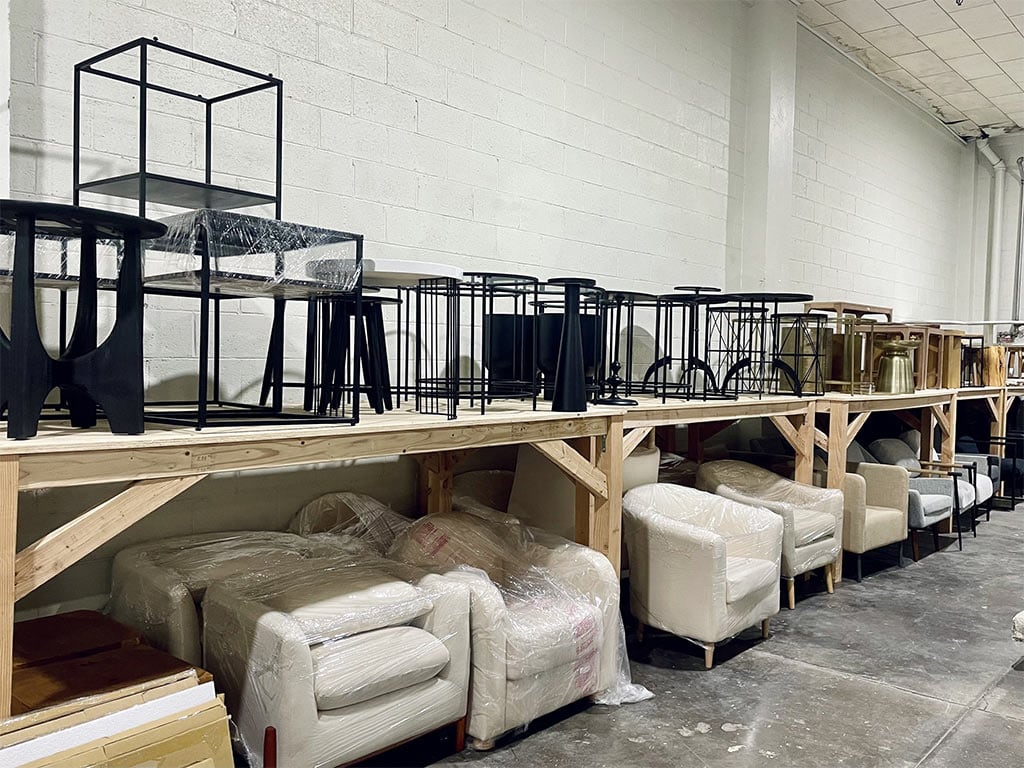
You can build an inventory of furniture without buying it all at once. The idea is to start small and reinvest in buying furniture over time.
As you earn income by using the other methods listed here to find furniture for your home staging business, reinvest some of your profits into slowly building your own inventory.
For example, when you start out, you might rent a couch. Over time, you’ll be able to purchase your own couch, and then you’ll save on the ongoing costs of renting one. Eventually, you can invest those savings into buying additional pieces of furniture, and eventually, your personal inventory will snowball in size.
Building your own inventory is completely optional – plenty of stagers remain highly successful without ever owning large amounts of furniture. If you do decide to build up gradually, the same principle applies to smaller décor items like lamps, pillows, and rugs.
The key takeaway is that you don’t need a huge upfront investment to get started. You can begin lean, grow smartly, and let your profits fund your future inventory piece by piece.
Here is what a gradual reinvestment strategy might look like in practice:
| Stage | Investment Focus | Result |
|---|---|---|
| Month 1 – 3 | Rent furniture for first few jobs | Build portfolio and client base |
| Month 4 – 6 | Purchase one key item (e.g. a sofa or bed) | Reduce rental costs |
| Month 7 – 12 | Add decor and accessories | Increase design flexibility |
| Year 2+ | Buy full sets and store inventory | Scale business and profits |
Method 4: Use Your Own Furniture
While some home stagers say you should never use your own furniture to stage a home, others feel it’s okay to bend the rules, especially when just starting out. If you decide to use your own furniture to begin with, follow the general staging rules below.
Keep it Neutral
No matter what furniture you’re using, the goal when staging any room in any home is to choose neutral furniture and accessories. It’s essential to use high-quality pieces that don’t draw too much attention and have more décor value than practical comfort. The furniture should also align with the style of the home. If your furniture doesn’t meet these requirements, consider looking elsewhere.
Decorate Bedrooms Lightly
When staging a bedroom, remember to use less furniture and accessories than someone would need if they were decorating it to live there. Bedrooms are very personal spaces, so when you want a prospective buyer to envision themselves living there, the décor needs to be minimal.
Don’t Forget the Patio
Don’t forget to stage the patio with high-quality outdoor furniture – but remember that the neutral rule carries over to the outdoors as well as the inside of the home. Keep the patio furnishings simple in color and style. If you have some neutral outdoor furniture and bright-colored accents, you can use them to stage a patio.
Don’t let a lack of access to a warehouse full of furniture stop you from starting a home staging business. As we’ve explained, there are several other ways to access furniture and accessories while you’re starting and scaling.
While the costs of running a home staging business certainly aren’t low, there are plenty of ways to save costs on furnishings while you grow your profits.
In addition to the methods above, consider frequenting yard sales, consignment shops, auctions, and moving sales. If you’re into DIY projects, you can repurpose pieces by doing some simple reupholstering or painting. You can also consider partnering with stores to feature their pieces in the local homes you’re staging as a form of advertising.
Whatever method you choose, don’t let the idea of acquiring furniture overwhelm you. Just follow the tips above!
Start Smart, Not Expensive
Starting a home staging business doesn’t have to mean owning a warehouse full of furniture. The most successful stagers today began with creativity, not capital – renting what they needed, working with occupied homes, and reinvesting slowly as they grew.
If you focus on building your eye for design, strong relationships with realtors, and a professional presentation, your business will naturally expand over time.
Whether you rent, repurpose, or use your own décor, the goal is the same – to create inviting, beautiful spaces that help homes sell faster.
If you’d like a step-by-step guide to getting started, from pricing and consultations to styling and client management, explore our Home Staging Certification Courses and take the quiz to find the best one for your goals.


